Ultimate guide to South Africa
South Africa - wild at heart
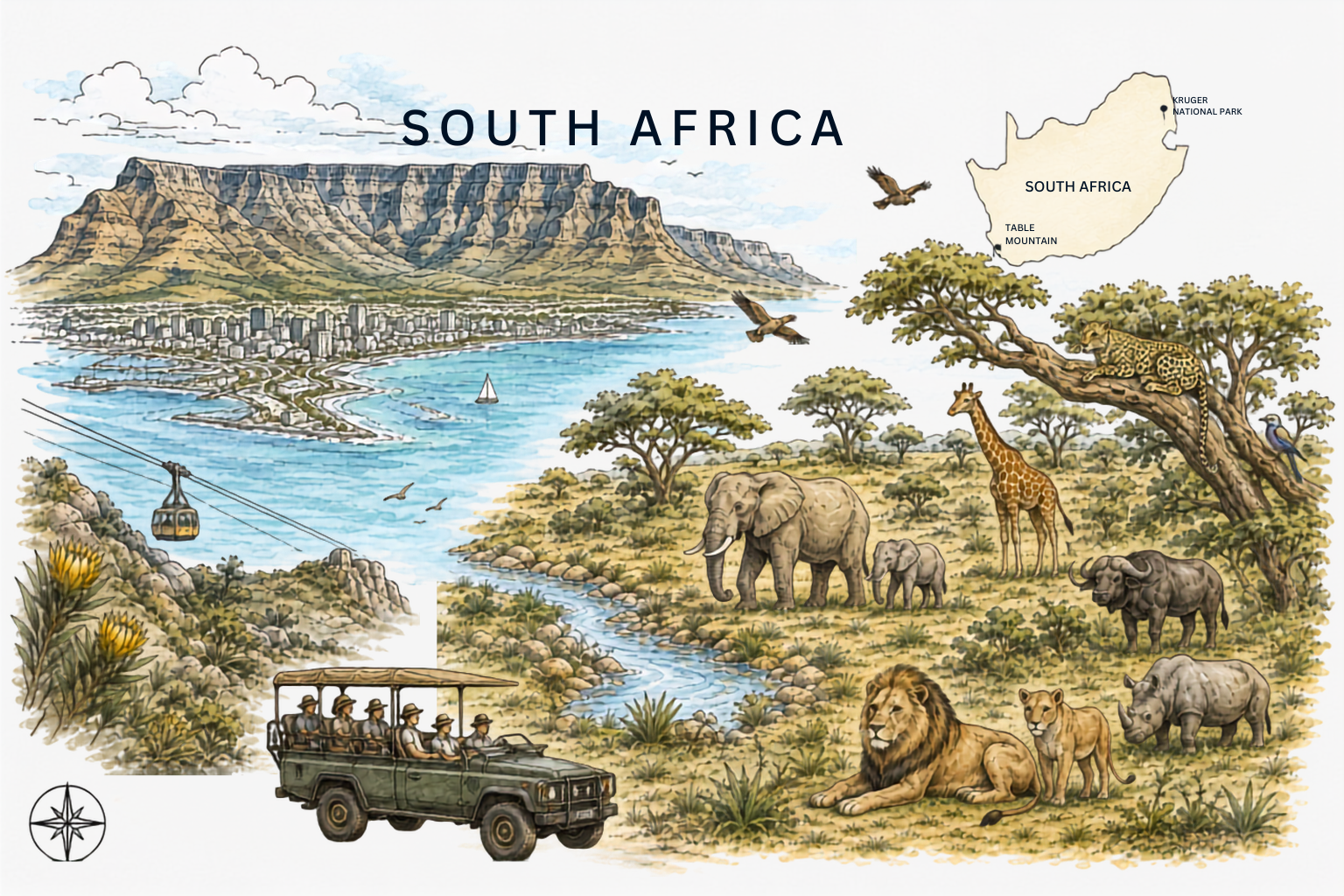
From the cosmopolitan energy of Cape Town to the silent drama of the Sabi Sand, South Africa offers an extraordinary concentration of experiences in one remarkable journey.
Wine, wilderness, mountains, coastlines, culture and some of the world's most exceptional safari lodges can all be woven together into a journey that feels entirely your own.
Whether you're drawn to the rhythm of Cape Town, the romance of the Winelands, the thrill of a private safari or the wild beauty of the coast, we design South Africa around you.
Our first-hand knowledge helps us match each journey with the right places, the right guides and the right experiences — creating a seamless itinerary that feels considered from beginning to end.
Things we love about South Africa
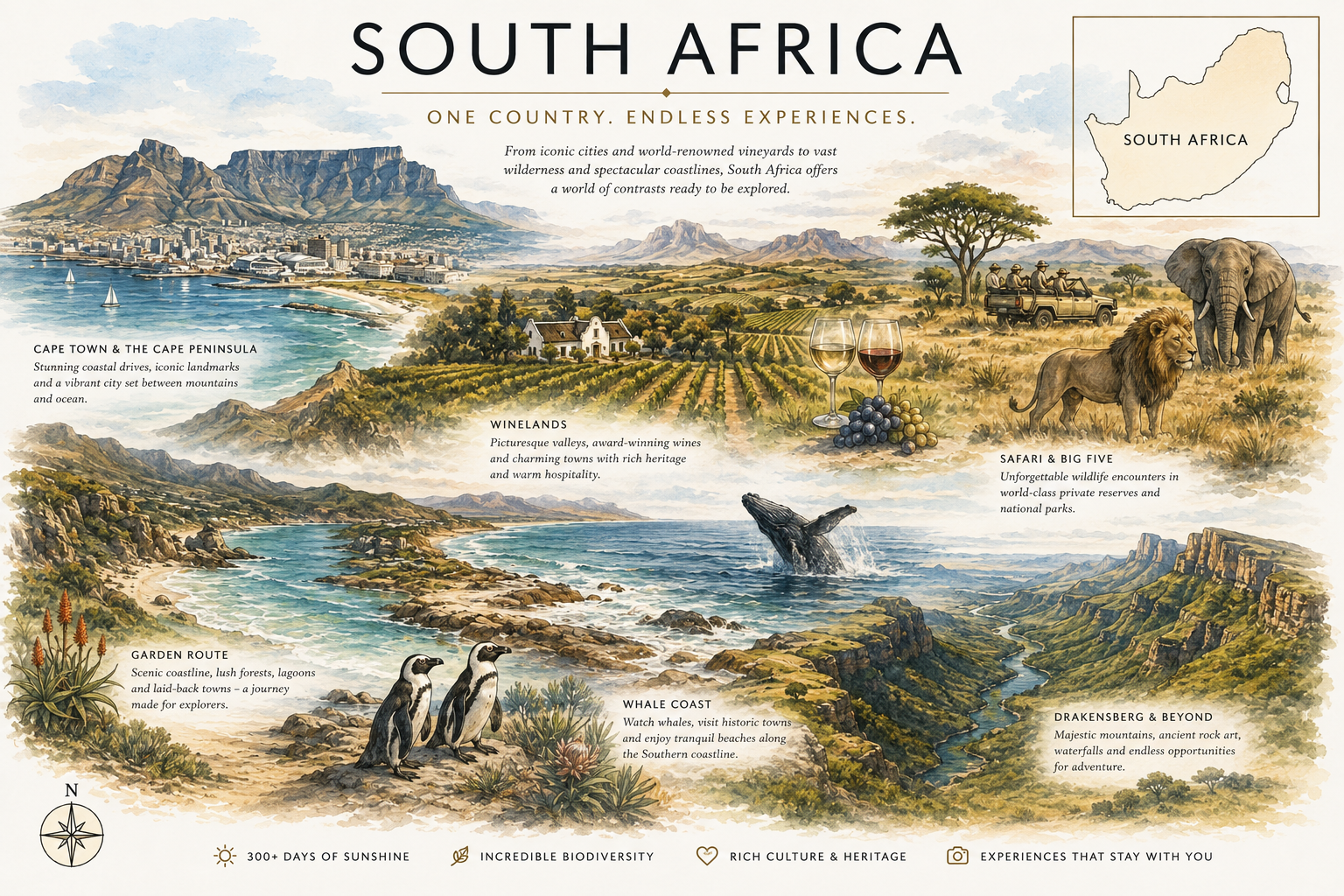
ONE COUNTRY. ENDLESS EXPERIENCES.
From iconic cities and world-renowned vineyards to vast wilderness and spectacular coastlines, South Africa offers a world of contrasts ready to be explored.
CAPE TOWN & THE CAPE PENINSULA
City energy. Mountain landscapes. Ocean air. Stunning coastal drives, iconic landmarks and a vibrant city set between mountains and ocean.
WINELANDS
Long lunches, extraordinary wine and beautiful landscapes. Picturesque valleys, award-winning wines and charming towns with rich heritage and warm hospitality.
SAFARI & BIG FIVE
The thrill of tracking wildlife on foot and by vehicle. Spend quality time with wildlife on a more exclusive basis than in some countries. Unforgettable wildlife encounters in world-class private reserves and national parks.
GARDEN ROUTE
Scenic coastline, lush forests, lagoons and laid-back towns – a journey made for explorers.
WHALE COAST
Whales, beaches and dramatic scenery. Watch whales, visit historic towns and enjoy tranquil beaches along the Southern coastline.
DRAKENSBERG & BEYOND
Majestic mountains, ancient rock art, waterfalls and endless opportunities for adventure.
Why choose South Africa?
Outstanding Big Five wildlife viewing
Exceptional luxury lodges and boutique hotels
Excellent infrastructure and road network
Easy domestic flights
Malaria-free safari options
World-class food and wine
Beautiful beaches and coastal experiences
Incredible diversity within one holiday
Excellent value for luxury travellers
Few destinations allow guests to combine a luxury safari, cosmopolitan city, wine country, mountains, and coastline in one seamless itinerary.
Who Is South Africa Best Suited For?
South Africa is perfect for:
First-time African safari visitors
Luxury travellers
Honeymooners
Families
Multi-generational holidays
Photographers
Food and wine enthusiasts
Adventure seekers
Golf travellers
Repeat safari guests looking for variety
Why Repeat Visitors Keep Returning
South Africa is impossible to experience in one visit.
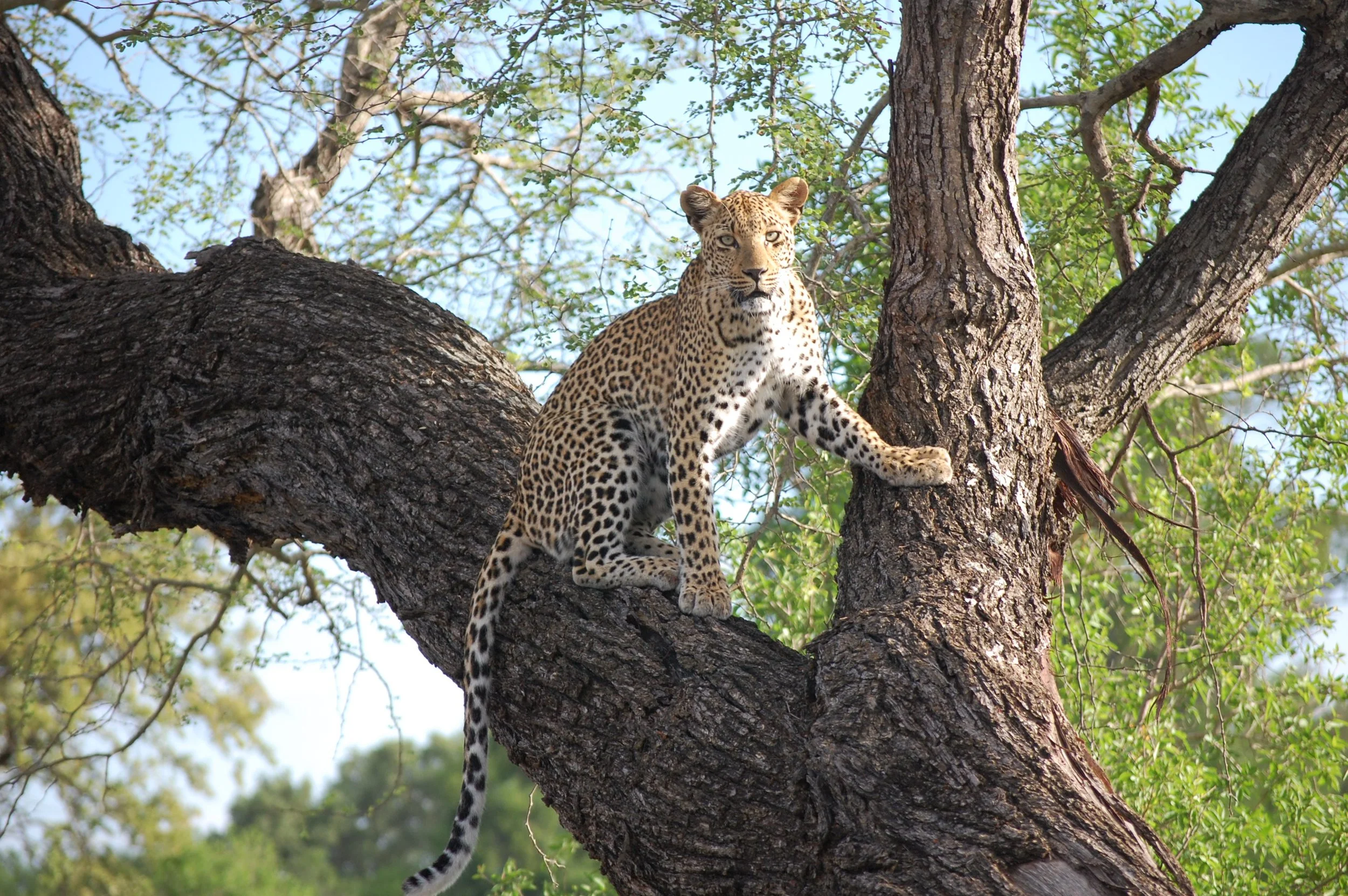
Each region offers something completely different, from tracking leopards in Sabi Sand to exploring the vineyards of Stellenbosch, hiking Table Mountain, diving with sharks, watching whales in Hermanus, or discovering the remote beauty of the Kalahari.
Many guests return several times to experience different safari regions and exclusive lodges.
Why use DNA Wild for your South Africa trip
First-hand destination knowledge, and we have an office based in South Africa
Personal relationships with trusted partners
Specialist expertise
Tailor-made itineraries - never cookie-cutter
A personal, concierge-level approach
Deep African roots
The ability to combine South Africa with the rest of the world in a seamless itinerary
South Africa is special to us - South Africa isn't simply somewhere we send travelers. It's where our founder's love of Africa began. With first-hand knowledge of the country's regions, lodges and experiences, we know how to create a journey that feels effortless, personal and genuinely extraordinary.
Things to know when traveling
-
South Africa offers incredible travel experiences throughout the year. Whether you're planning a luxury safari in Kruger National Park, going over the drier winter months (June - September is best). If you are exploring Cape Town, or visiting the Cape Winelands, this can really be done any time of year because it is usually added to safari but April is probably the best time of year for great weather. Spotting something specific like whales along the coast, you should travel June to December, with the peak stretching from August to October.
-
You will need a passport valid for 6 months beyond your return date. Your passport must have a minimum of two entirely blank visa pages, side-by-side, for each country you will visit.
Traveling on a USA passport, no visa is required to enter South Africa.
All travelers entering or departing South Africa are required to complete an online Traveler Declaration before travel.
The declaration can only be submitted within 24 hours of your scheduled arrival into South Africa.
Downloading the app is not compulsory. The declaration can be completed online here:
-
At present, no vaccinations are required for entry into South Africa unless you are arriving from a region that they consider to be at risk of Yellow Fever (in which case proof of vaccination is required). Take the time to review the CDC Health Information for Travelers to South Africa by clicking here. Know that throughout your experience, you will be in luxury properties and in the hands of hospitality teams who are subject to international hospitality standards. You will have bottled water within reach at all times and should never find yourself drinking water from a local well or similar.
It is recommended that you consult with your physician, as the individual who knows the most about your health and previous vaccinations, to inform them that you will be visiting South Africa and on safari in an area where Malaria is present. Knowing your medical history, your physician will advise and direct you on how to best medically prepare.
-
Electrical outlets are powered by 220v, however, most modern devices will make a currency conversion automatically when necessary.
Travel Adapters can often be provided by properties, but we do recommend carrying your own for good measure. Outlets are most commonly 15 amp round 3 pins or 5 amp 2 pin prong with round pins. Type M electrical plugs will be most often encountered, but a type C and G are used in some areas. Below are images of each in order of those most commonly used from left to right.
WiFi is available at all camps, inside your accommodation
-
The currency unit is the Rand (ZAR), denoted by the symbol R, with 100 cents making up R1 (one Rand). Foreign currency can be exchanged at local banks and Bureaux de Change, but you will find the best exchange rates by removing cash directly from the international airport ATM machines. Please click here for the current USD to ZAR rate of exchange.
-
It is important that you protect both yourself and the investment you have made in this experience if unforeseen circumstances arise. Your personal Travel Advisor will provide a policy recommendation and full details on taking these preventative measures. Please note that in some instances, proof of travel insurance is required by suppliers as a condition of booking.
-
Summer
Over summer (mid-October to mid-February), much of South Africa is characterized by hot, sunny weather – often with afternoon thunderstorms that clear quickly. the western Cape with its Mediterranean climate is the exception, getting its rain in winter.
Autumn
Autumn (fall) in South Africa (mid-February to April) offers the best weather in some respects. Very little rain falls over the whole country, and it is warm but not too hot, getting cooler as the season progresses. In Cape Town, autumn is fantastic, with hot sunny days and warm, balmy nights which many people spend outdoors.
Winter
Winter in South Africa (May to July) is characterized by dry, sunny, crisp days and cold nights. The hot, humid KwaZulu-Natal coast, as well as the Lowveld (lower-lying areas) of Mpumalanga and Limpopo provinces, offer fantastic winter weather with sunny, warmish days and virtually no wind or rain. the western Cape gets most of its rain in winter, with quite a few days of cloudy, rainy weather. However, these are always interspersed with wonderful days to rival the best of a British summer.
Spring
Nowhere in South Africa is spring (August to mid-October) more spectacular than in the Cape provinces. Here the grey winter is forgotten as thousands of small, otherwise insignificant plants cover the plains in an iridescent carpet of flowers.
-
Packing for a trip can be stressful, particularly for a new destination with some unique considerations. To assist below is a brief recommended packing list. *Please consider both the time of year you will be traveling and the luggage restrictions outlined below when preparing these items for your luggage.
• Closed-toed walking shoes
• Golf Shirts or T-shirts – long sleeve for travel in the winter
• Long trousers/slack – khakis or jeans
• Pajamas - lightweight for summer and warm/thermal for the cooler nights in winter.
• Underwear - (sports bra recommended for game drives as the roads can be bumpy and uneven) and socks – thermal option recommended for the winter months.
• Scarf/bandana – particularly for dusty dry regions.
• Sandals – preferably low heeled or flat if you are on safari.
• Bathing Suit
• Jacket/Fleece – ideally with a wind & water-resistant outer layer and fleece inner lining in winter
• Gloves and beanies/woolen hats in winter
• Light rain gear for summer months
• More formal attire (slacks and collared shirts or dresses) for your stay at prestigious city hotels
Equipment/Other
• Photographic Equipment – bring the best you have and are comfortable using. Be sure to include a backup battery and ample memory cards for storage.
• Binoculars - 8x40/8x42 or 10x40/10x42 are the recommended general-purpose binocular specification for both birding and mammal viewing
• Sunscreen and Sunglasses (ideally polarized)
• Small Flashlight
• If you wear contact lenses, we recommend that you bring along a pair of glasses in case you get irritation from the dust.
• Personal toiletries (most establishments supply basic amenities)
• Basic personal medical items (aspirin, Imodium, antiseptic cream, and antihistamine cream)
• Malaria tablets (if applicable)
• Southern African bird guide if you are a keen birder, e.g., Newman’s or Sasol
Quick facts
| Fact | Details |
|---|---|
| Official Languages | Sepedi (Northern Sotho), Sesotho (Sotho), Setswana (Tswana), siSwati (Swazi), Tshivenda (Venda), Xitsonga (Tsonga), Afrikaans, English, isiNdebele, isiXhosa, isiZulu (English widely spoken across all luxury lodges and cities). |
| Currency | South African Rand (ZAR) |
| Capital | Pretoria (administrative), Cape Town (legislative), Bloemfontein (judicial) |
| Time Zone | GMT +2 |
| Plug Types | Type M (most common), Type C (found in luxury hotels and major airports) |
| Side of the Road | Drive on the left-hand side |
| Weather | Varies greatly – Mediterranean climate in Cape Town, subtropical along the east coast, semi‑arid in the interior, and desert in the northwest. |
| Best Time to Travel | Year-round, with different regions offering their own seasonal highlights. May‑September (dry winter) for world-class wildlife safaris; October‑April for coastal activities, Cape Town, and the Garden Route. |
| Health Preparation | No vaccinations legally required. Routine vaccinations recommended; malaria prophylaxis highly advised for Kruger National Park, northern provinces, and private game reserves. Please check with your healthcare provider for their recommendations based on your health. |
| Visa Information | Visa‑free for up to 90 days for citizens of the US, UK, EU, Canada, Australia, and New Zealand. If you have a passport from another country, please click here for more information. Always check current requirements before traveling. |
| Passport Requirement | Must be valid for at least 30 days beyond your planned departure date. 2 Open / clear "visa" pages in your passport are required for entry. |
| Safety | South Africa is a safe destination when travelling with experienced guides and reputable operators. Normal travel precautions apply, particularly in cities. |
| Internet | Excellent mobile coverage and Wi-Fi at most luxury lodges and hotels, although some remote safari camps may have limited connectivity. |
| Tipping | Tipping is customary. Safari guides, trackers, lodge staff and restaurant servers generally receive gratuities. |
| Drinking Water | Safe to drink in most urban areas and luxury lodges. Bottled or filtered water is provided where necessary. |
Best time to travel
| Months | Wildlife | Weather | Crowds | Cost | Photography |
|---|---|---|---|---|---|
| Jan–Feb | ★★★★☆ | Hot & rainy inland | Medium | Lower | Lush landscapes |
| Mar–Apr | ★★★★★ | Warm & pleasant | Medium | Moderate | Excellent |
| May–Jun | ★★★★★ | Cool & dry | Low | Good | Outstanding |
| Jul–Aug | ★★★★★ | Dry winter | High | High | Outstanding |
| Sep–Oct | ★★★★★ | Spring | High | High | Excellent |
| Nov | ★★★★☆ | Warm | Medium | Moderate | Excellent |
| Dec | ★★★★☆ | Hot | Very High | Highest | Green scenery |
| Months | Whale Watching | Beaches | Green Season | Lodge Availability | Our Pick |
|---|---|---|---|---|---|
| Jan–Feb | Excellent | Excellent | Yes | Good | Good for savings |
| Mar–Apr | Good | Very Good | Ending | Good | Good for less crowds |
| May–Jun | Limited | Cool | No | Excellent | Sweetspot for good rate but best time to travel |
| Jul–Aug | Good | Cool | No | Limited | Best game viewing but quite busy |
| Sep–Oct | Peak season | Warming | No | Limited | Great time to travel for less crowds and good game viewing |
| Nov | Excellent | Very Good | Beginning | Good | Good for savings |
| Dec | Good | Excellent | Yes | Limited | Would avoid due to crowds from the second week onward |
Explore the region with Journey inspirations
Your trip to South Africa could include so much but here are some suggestions we think could work:
Safari, Cape Town & Winelands
The perfect first taste of South Africa.
The Ultimate South African Escape
Cape Town, the Winelands, safari and the coast.
South Africa & Victoria Falls
City, wine, wildlife and one of Africa's greatest natural wonders.
A Family Safari Adventure
Big Five encounters, beautiful lodges and experiences designed for every generation.
The Romantic South Africa
Private safari, wine country, dramatic landscapes and unforgettable stays.
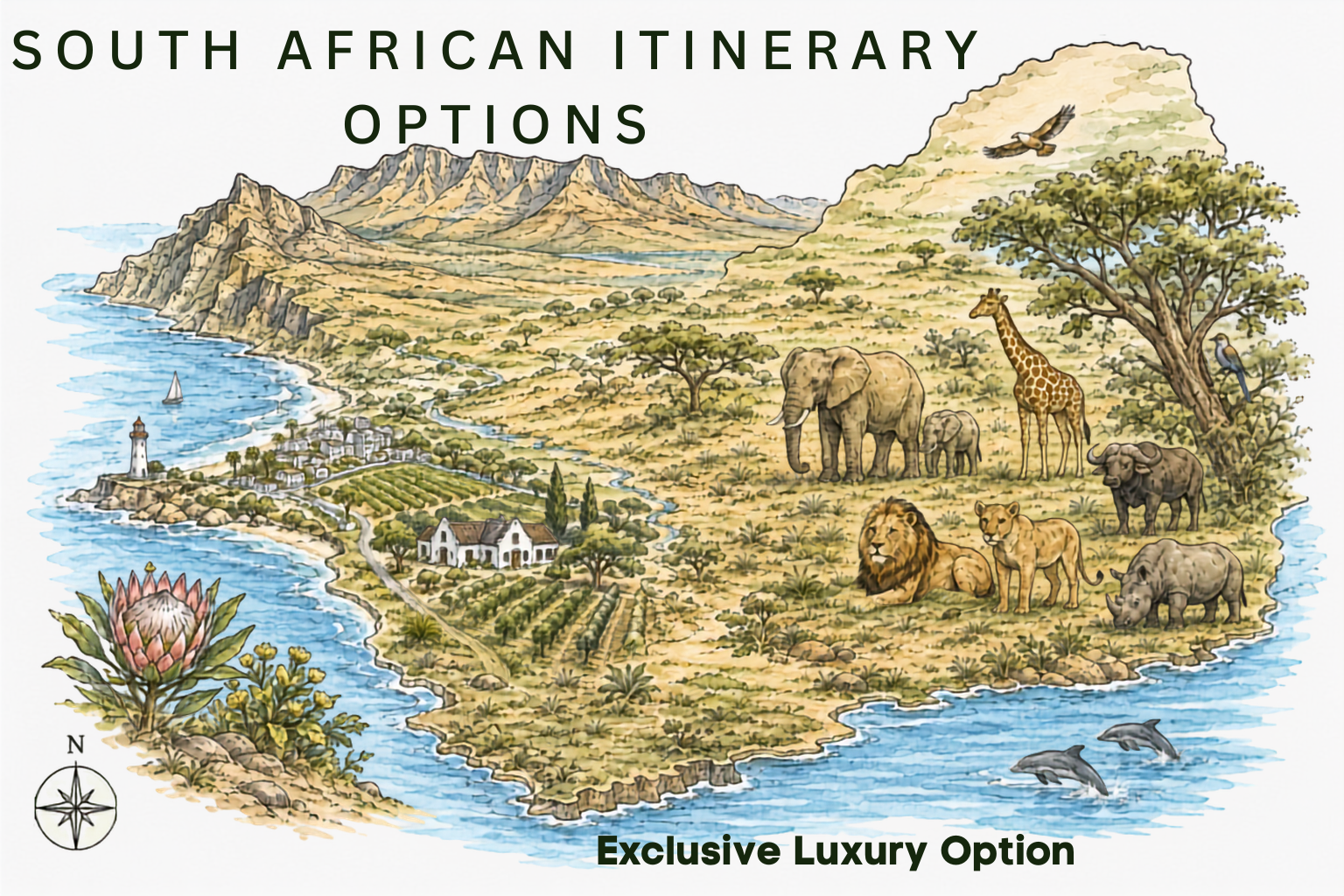
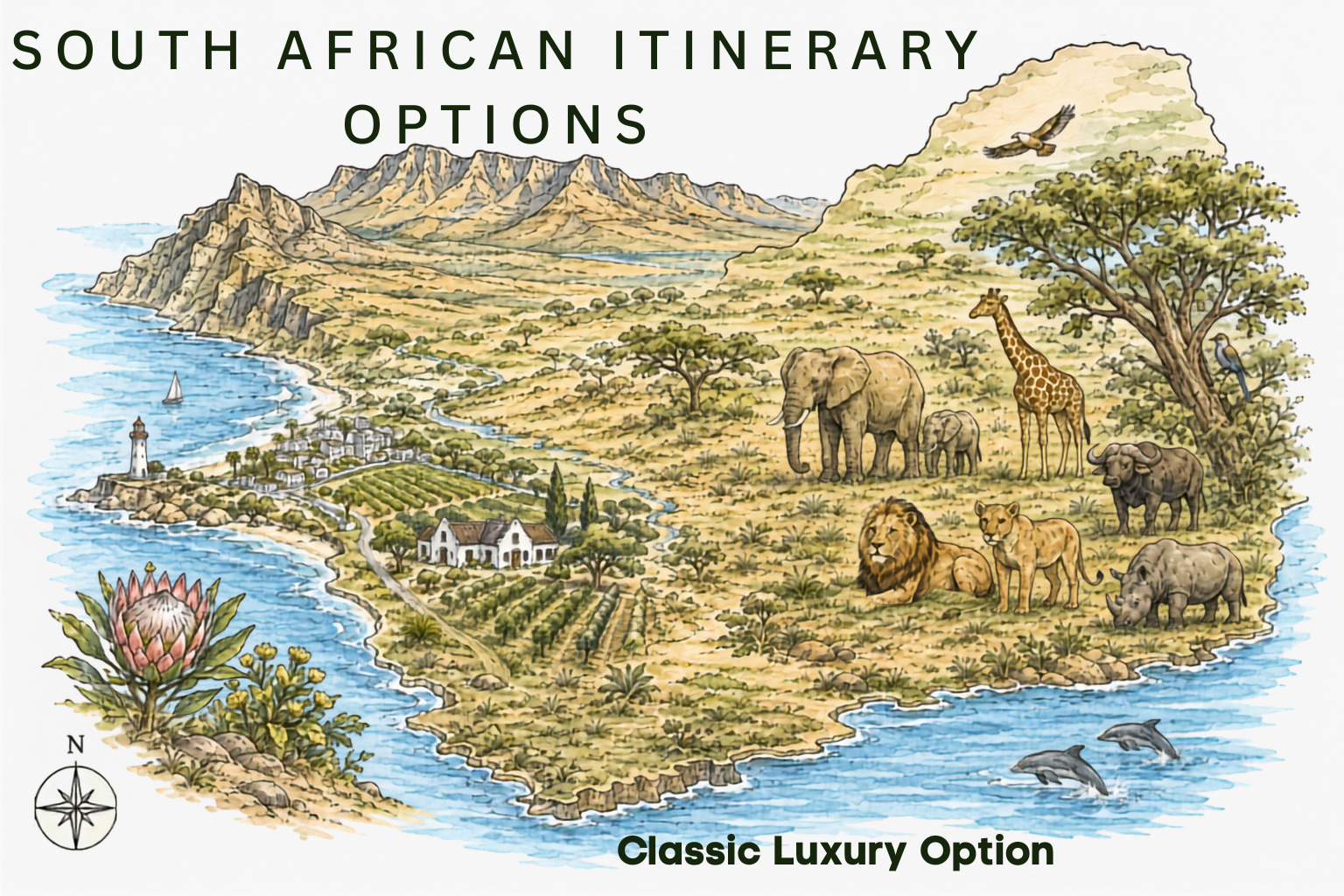
Explore the region with our preferred partners
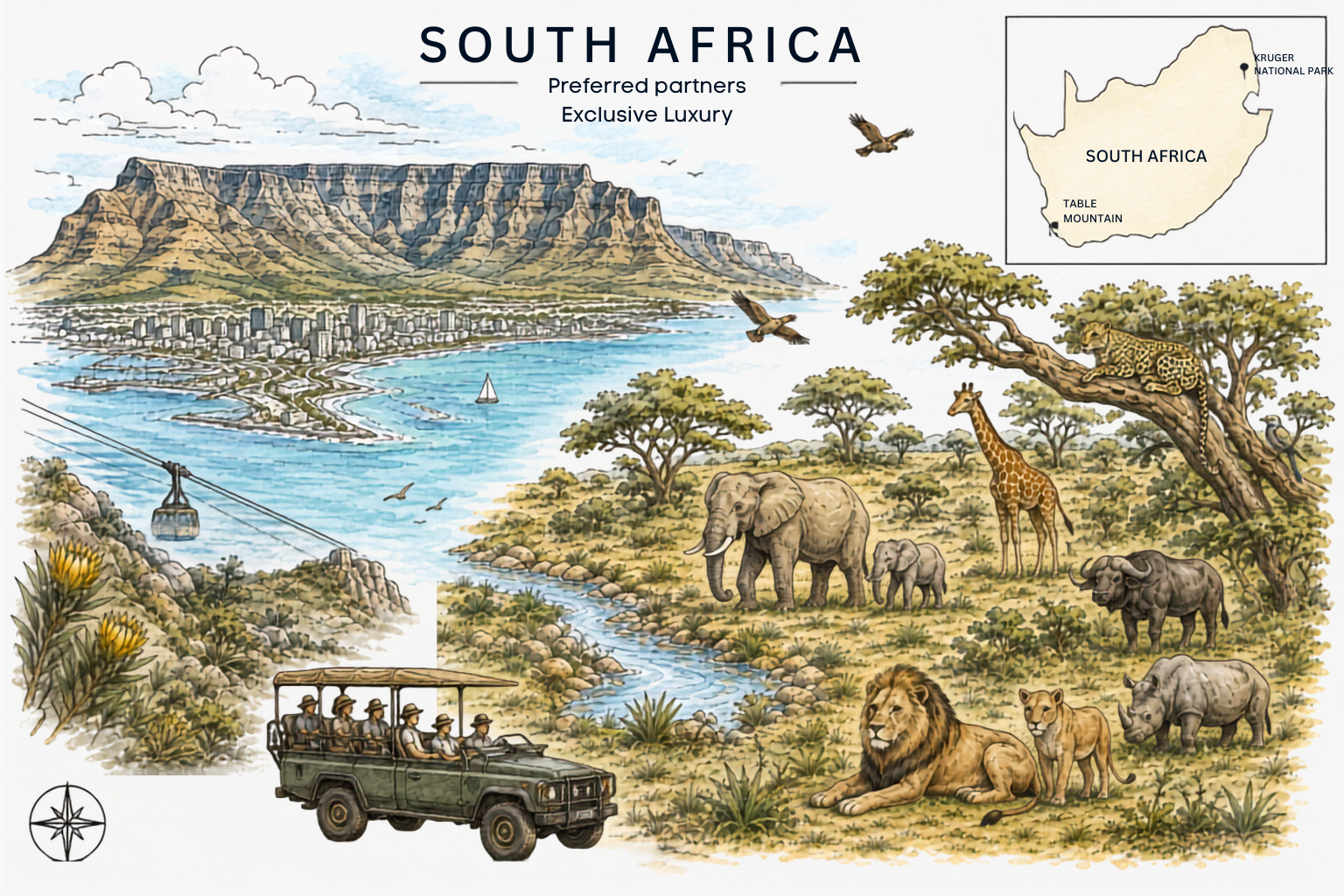
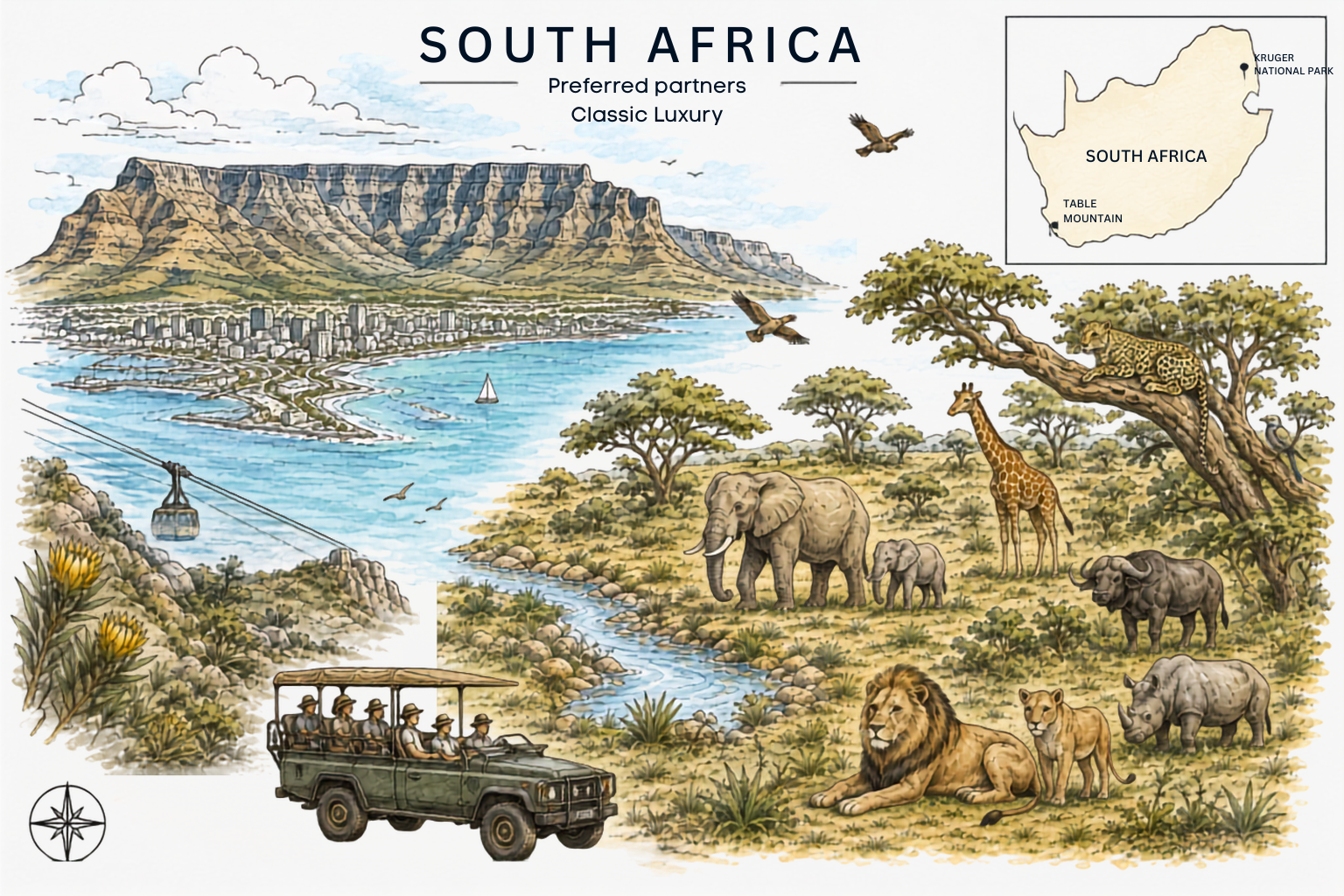
Other countries that combine well to continue your exploration